Appearance
Architecture Source Map
Architecture Source Map Graphics Coverage
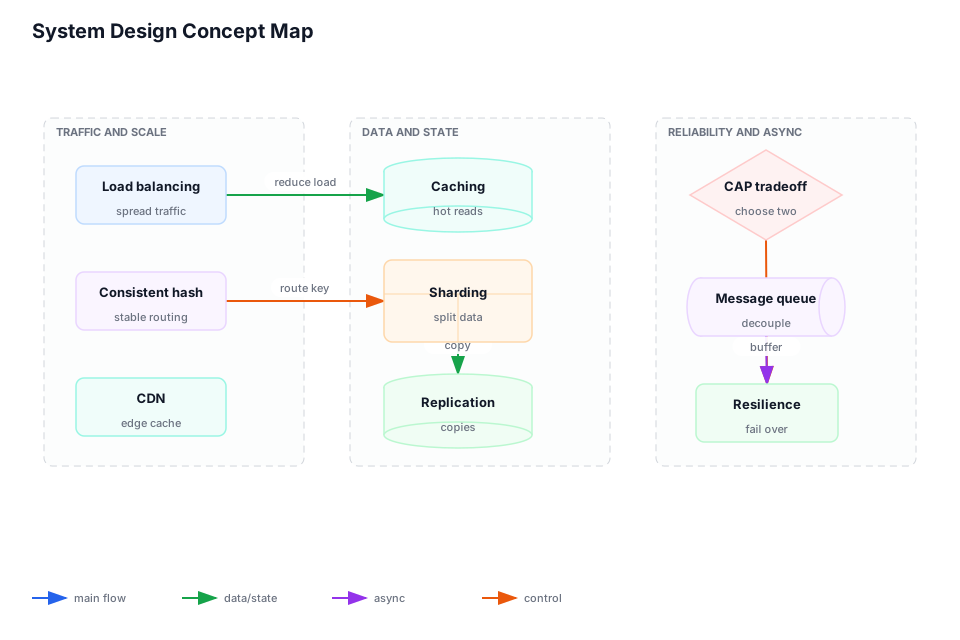
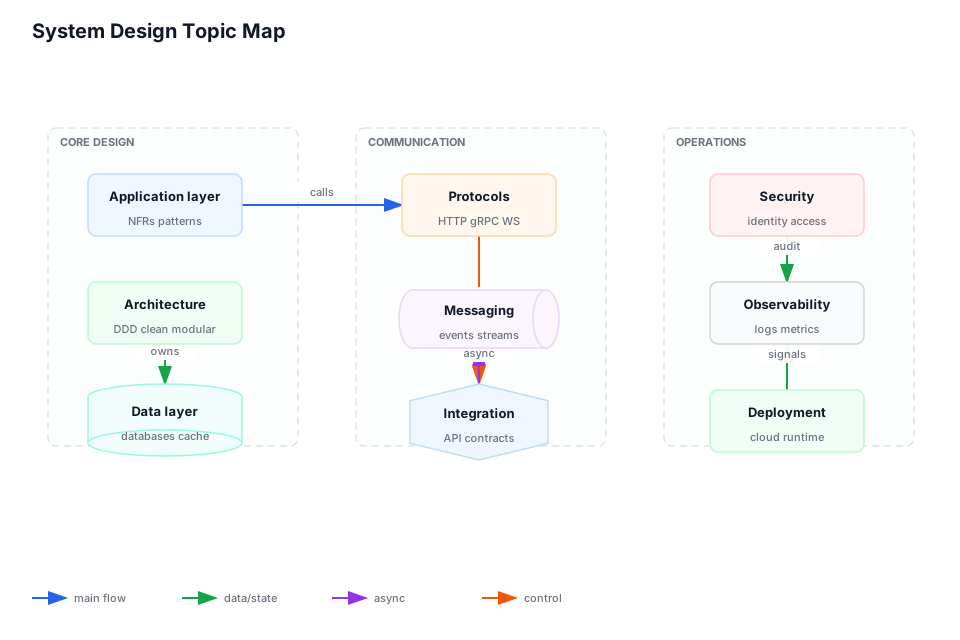
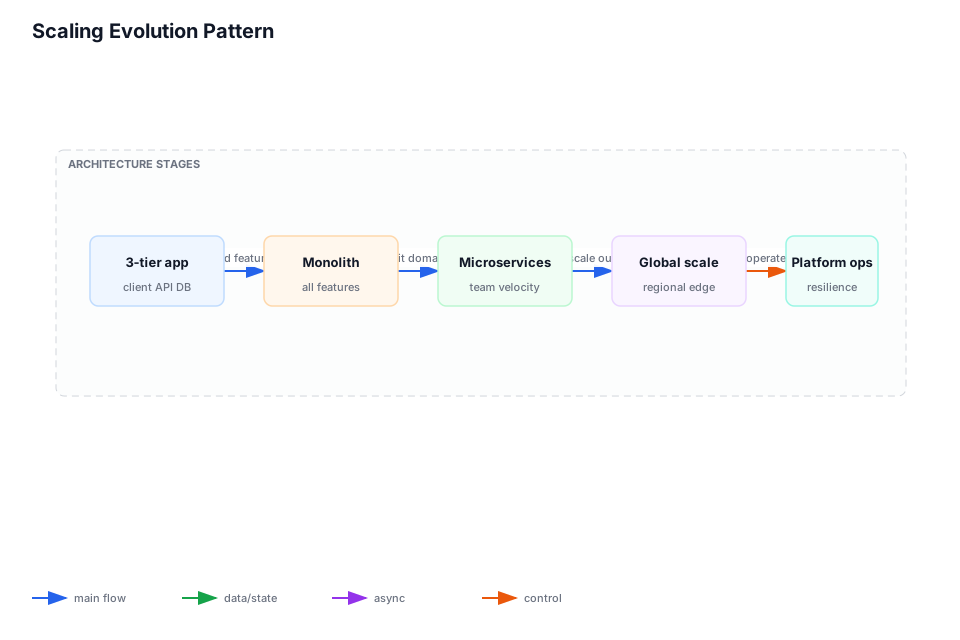
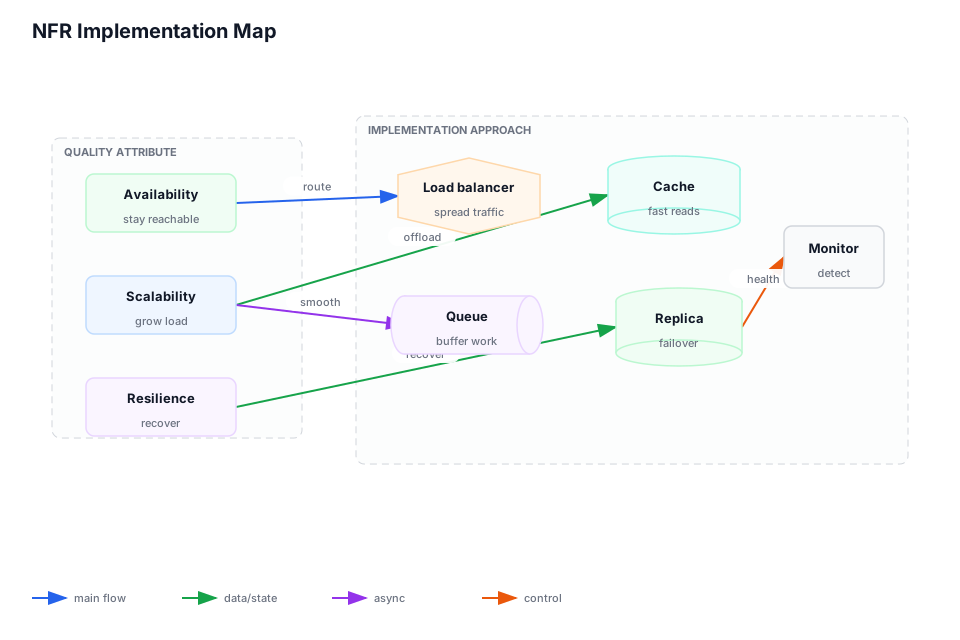
Primary chapter graphic: System Design Concept Map, System Design Topic Map, Scaling Evolution Pattern, NFR Implementation Map. Accepted graphics: 4. Reviewed non-signal pages: 12. Open graphics in review: 0. QA status lives in graphics audit and visual review ledger.
Corpus pages: p. 1, p. 30, p. 39, p. 57, p. 63-64, p. 68, p. 75, p. 77-78, p. 88, p. 113, p. 132, p. 134, p. 162, p. 182-183, p. 204, p. 225, p. 229, p. 248, p. 258, p. 265, p. 276, p. 279, p. 301, p. 305-307, p. 346, p. 360, p. 363, p. 369-370, p. 375, p. 390 Coverage: 36 pages; low-confidence extraction ranges: p. 1, p. 57, p. 75, p. 132, p. 276, p. 301, p. 305-307, p. 360, p. 363, p. 369-370, p. 375, p. 390
This chapter is part of Marius's owned architecture build corpus. The text routes decisions; durable implementation signal is carried by accepted graphics, reviewed non-signal decisions, and the linked QA audit.
Chapter Visuals
Accepted graphics carry the canonical design signal for this chapter. Each selected source page is either accepted as a graphic or explicitly marked non-signal in the source-faithful ledger. Review and QA state live in visual inventory, visual review ledger, and graphics audit.
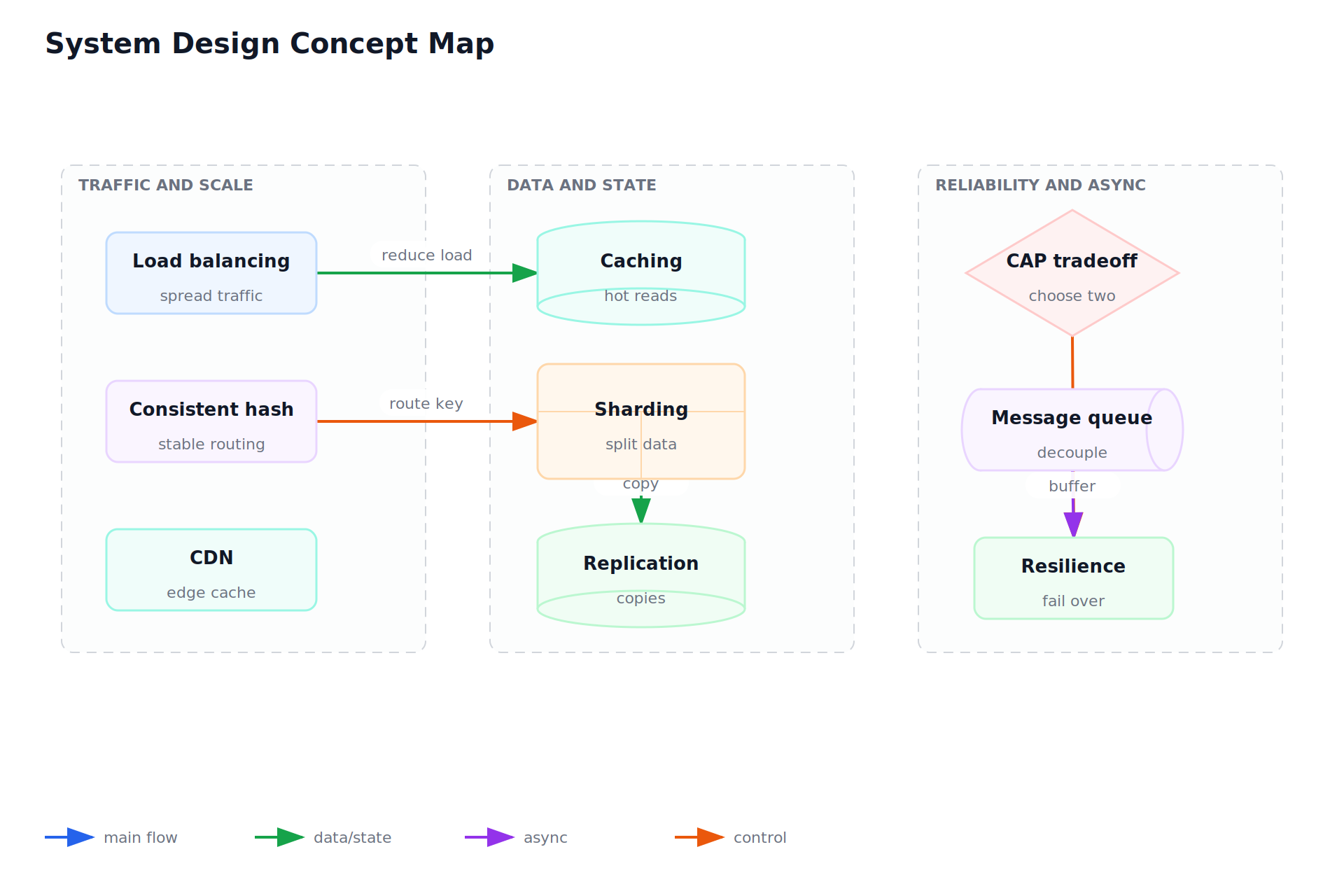
System Design Concept Map
- source-page: p. 134
- batch: 01
- status: accepted
- reviewer-status: reviewed
- fidelity-score: 0.9
- spec: bbg-p0134-architecture-source-map-architecture-source.json
- svg: bbg-p0134-architecture-source-map-architecture-source.svg
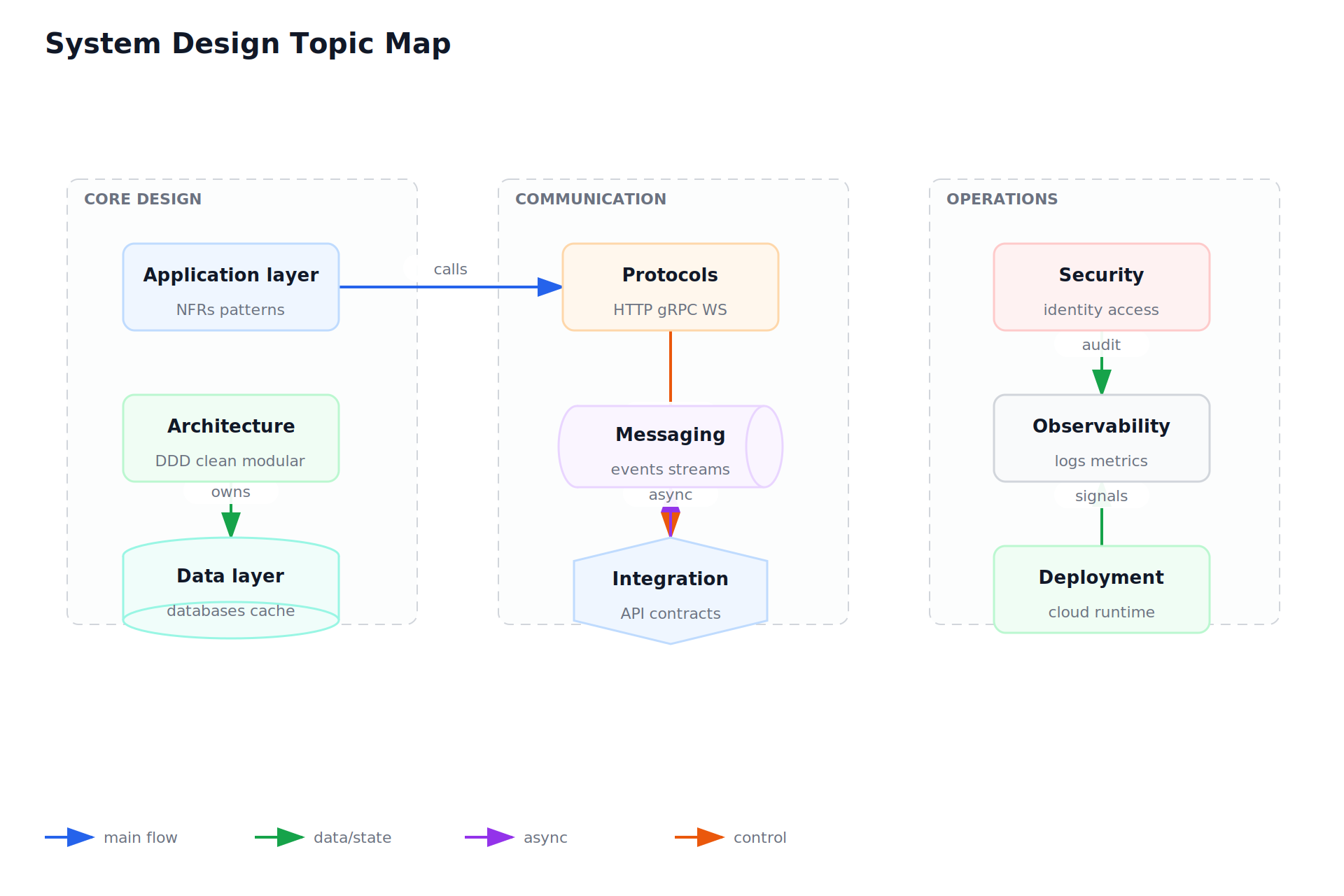
System Design Topic Map
- source-page: p. 162
- batch: 03
- status: accepted
- reviewer-status: reviewed
- fidelity-score: 0.9
- spec: bbg-p0162-architecture-source-map-architecture-source.json
- svg: bbg-p0162-architecture-source-map-architecture-source.svg
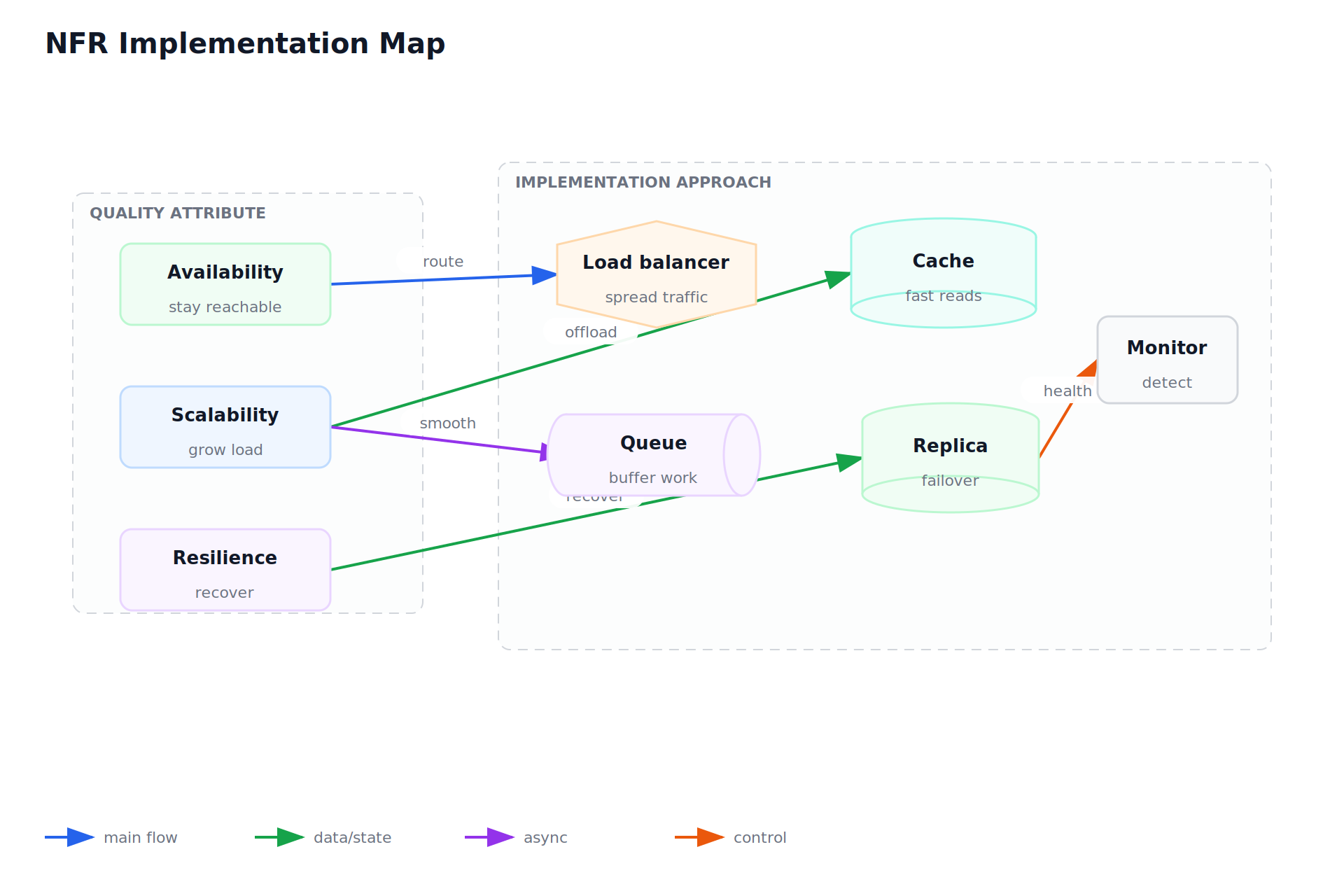
NFR Implementation Map
- source-page: p. 248
- batch: 03
- status: accepted
- reviewer-status: reviewed
- fidelity-score: 0.9
- spec: bbg-p0248-architecture-source-map-architecture-source.json
- svg: bbg-p0248-architecture-source-map-architecture-source.svg
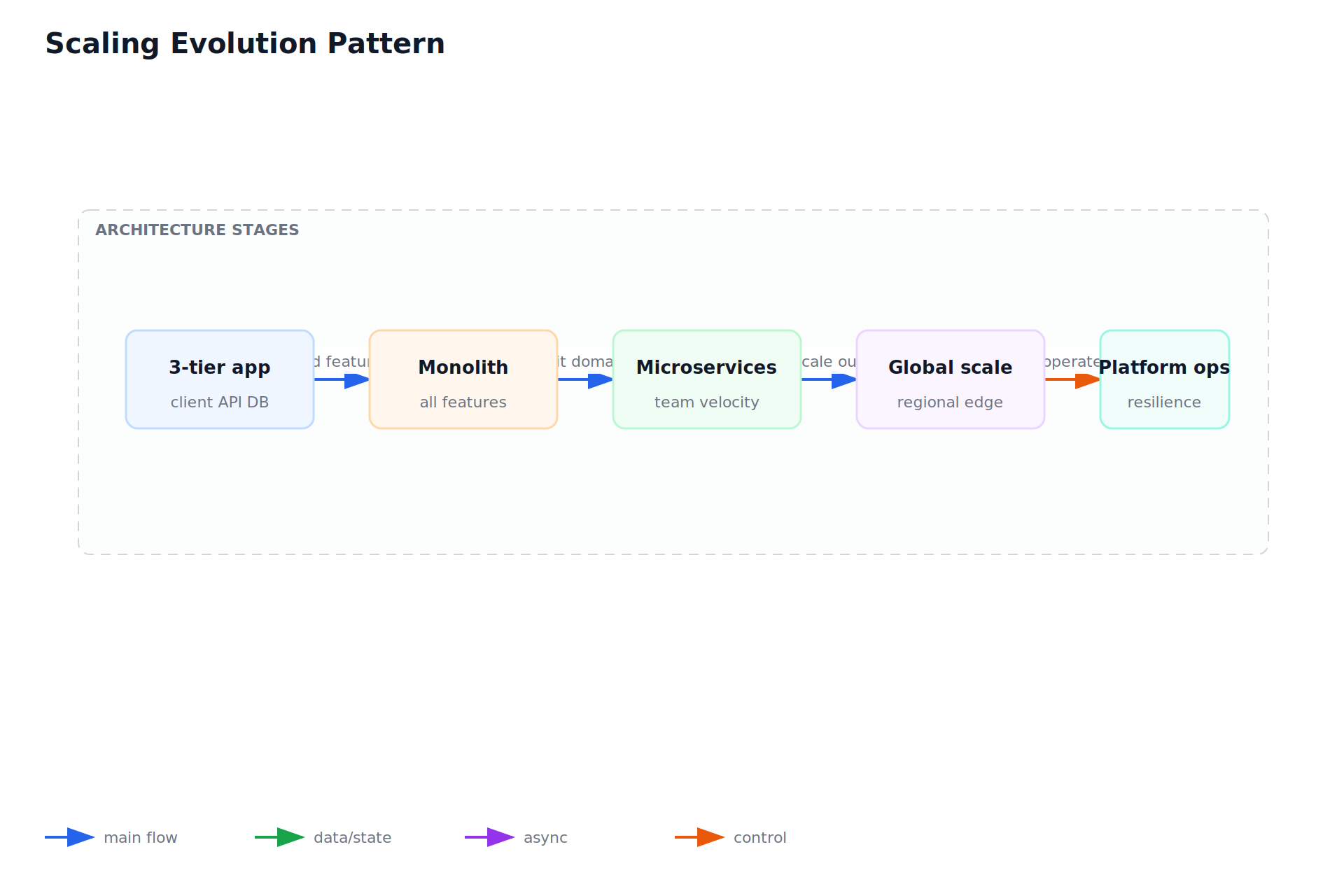
Scaling Evolution Pattern
- source-page: p. 258
- batch: 03
- status: accepted
- reviewer-status: reviewed
- fidelity-score: 0.9
- spec: bbg-p0258-architecture-source-map-architecture-source.json
- svg: bbg-p0258-architecture-source-map-architecture-source.svg
Open Review Queue
- none
Reviewed Non-Signal Pages
- Architecture Source Map: Queue + Database Map: source p. 360; batch 02; status non-signal/reviewed; ledger reason in visual-review-ledger.json
- Architecture Source Map: RAG + Workflow Map: source p. 279; batch 06; status non-signal/reviewed; ledger reason in visual-review-ledger.json
- Architecture Source Map: Database + Replication Map: source p. 64; batch 07; status non-signal/reviewed; ledger reason in visual-review-ledger.json
- Architecture Source Map: Cache + RAG Map: source p. 225; batch 09; status non-signal/reviewed; ledger reason in visual-review-ledger.json
- Architecture Source Map: Concept Map Map: source p. 132; batch 10; status non-signal/reviewed; ledger reason in visual-review-ledger.json
- Architecture Source Map: Cache + RAG Map: source p. 346; batch 10; status non-signal/reviewed; ledger reason in visual-review-ledger.json
- Architecture Source Map: Concept Map Map: source p. 375; batch 10; status non-signal/reviewed; ledger reason in visual-review-ledger.json
- Architecture Source Map: Cache + RAG Map: source p. 68; batch 11; status non-signal/reviewed; ledger reason in visual-review-ledger.json
- Architecture Source Map: Agent + Tool Map: source p. 78; batch 11; status non-signal/reviewed; ledger reason in visual-review-ledger.json
- Architecture Source Map: Cookie + HTTP Map: source p. 229; batch 12; status non-signal/reviewed; ledger reason in visual-review-ledger.json
- Architecture Source Map: Map Map: source p. 75; batch 13; status non-signal/reviewed; ledger reason in visual-review-ledger.json
- Architecture Source Map: Database + Index Map: source p. 363; batch 24; status non-signal/reviewed; ledger reason in visual-review-ledger.json
Use When
- You need to orient a design review, learning path, or system sketch before choosing a concrete component.
Avoid When
- You already have a bounded production defect with a known owner.
Core Model
- Treat the source map as a routing layer. It helps decide which chapter owns the next question and which source pages deserve inspection.
- Prefer explicit ownership over accidental coupling. Every boundary should say who owns correctness, cost, data, recovery, and change.
- Use corpus page pointers for inspection, and keep the chapter notes focused on reusable design decisions.
Implementation Guidance
- Start with the user-visible workflow, list the technical domains involved, then route each domain to one chapter and one owner.
- Write the smallest useful design note: purpose, inputs, outputs, state, failure behavior, observability, and rollback.
- Choose the first implementation that can be tested against the real workflow without hiding a known production risk.
Tradeoffs
- Maps reduce thrash, but they become stale unless tied to source pointers and coverage checks.
- Centralization reduces duplicated work but can become a bottleneck when every team needs exceptions.
- Specialized infrastructure helps at scale, but it must earn its operational cost.
Failure Modes
- The team debates labels instead of clarifying the next decision.
- The diagram shows boxes but not ownership, retry behavior, data freshness, or user-visible failure.
- The system has no proof path for the highest-risk assumption.
Decision Checklist
- Name the decision, route it to one primary chapter, and record the corpus pages that informed it.
- Name the owner, source of truth, timeout, retry policy, and evidence that the path works.
- Add one regression check for the failure mode most likely to recur.
Neutral Automation Examples
- A product team maps a vague reliability concern to observability, queues, and storage before opening implementation tasks.
- A neutral internal automation starts with fixtures, then adds credentials, permissions, and production scheduling only after the boundary is tested.
- A customer-facing workflow keeps irreversible actions behind explicit approval until metrics show it is safe to automate further.