Appearance
Database Performance and Indexing
Database Performance and Indexing Graphics Coverage
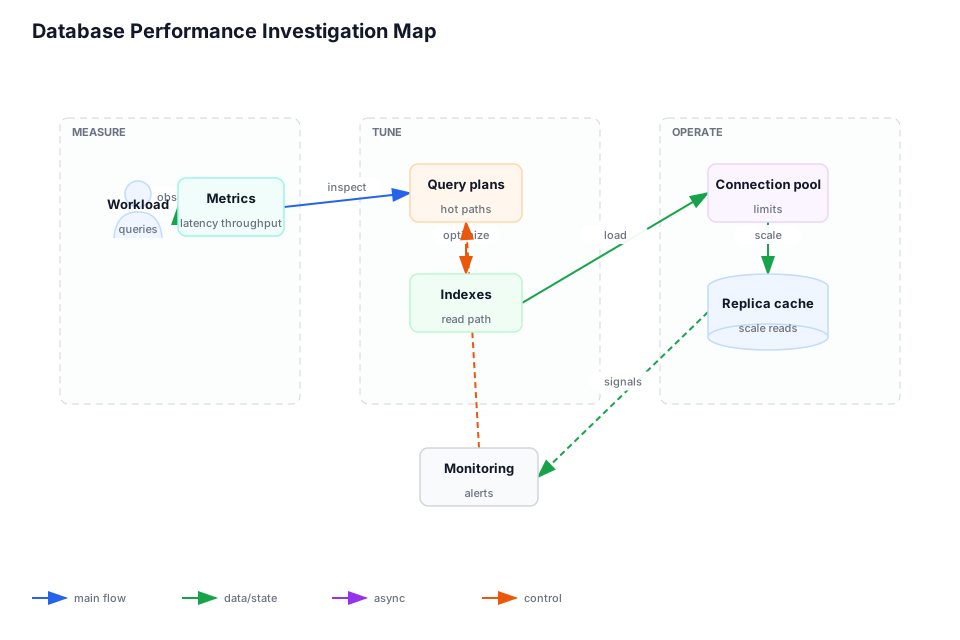
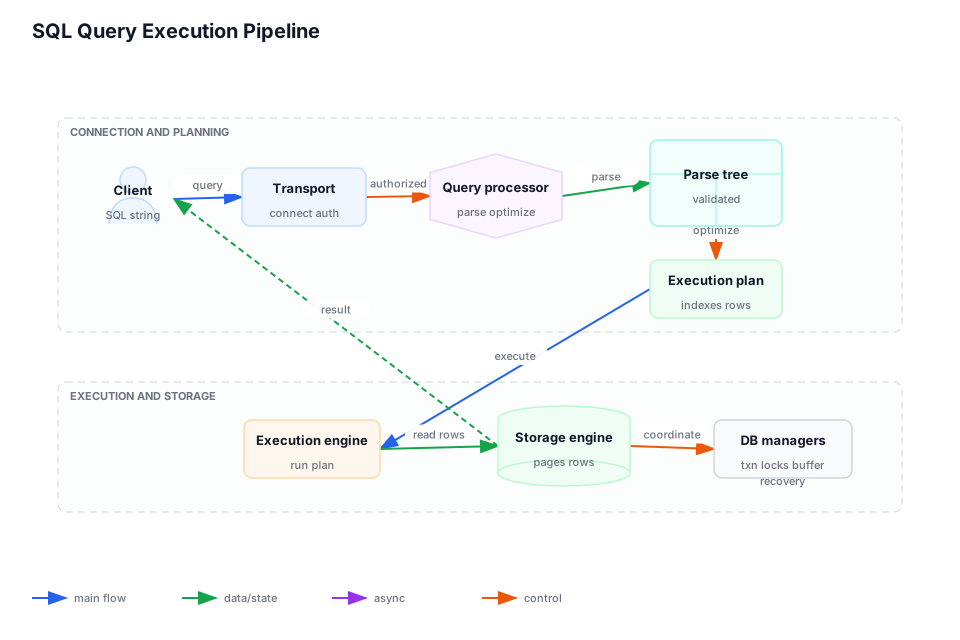
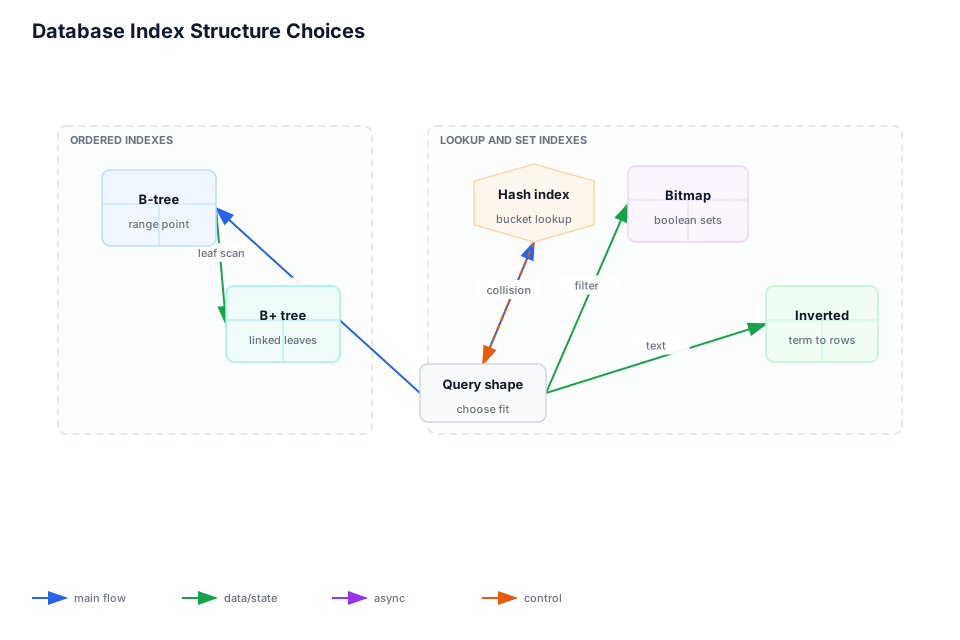
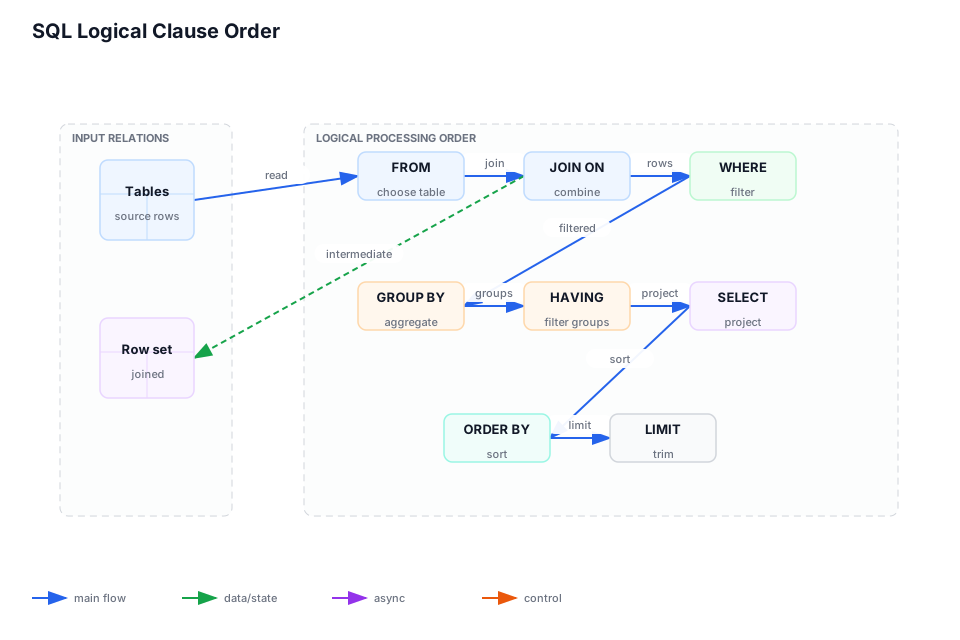
Primary chapter graphic: Database Performance Investigation Map, SQL Query Execution Pipeline, Database Index Structure Choices, SQL Logical Clause Order. Accepted graphics: 4. Reviewed non-signal pages: 2. Open graphics in review: 0. QA status lives in graphics audit and visual review ledger.
Corpus pages: p. 47, p. 155, p. 202-203, p. 227, p. 233, p. 240, p. 414 Coverage: 8 pages
This chapter is part of Marius's owned architecture build corpus. The text routes decisions; durable implementation signal is carried by accepted graphics, reviewed non-signal decisions, and the linked QA audit.
Chapter Visuals
Accepted graphics carry the canonical design signal for this chapter. Each selected source page is either accepted as a graphic or explicitly marked non-signal in the source-faithful ledger. Review and QA state live in visual inventory, visual review ledger, and graphics audit.
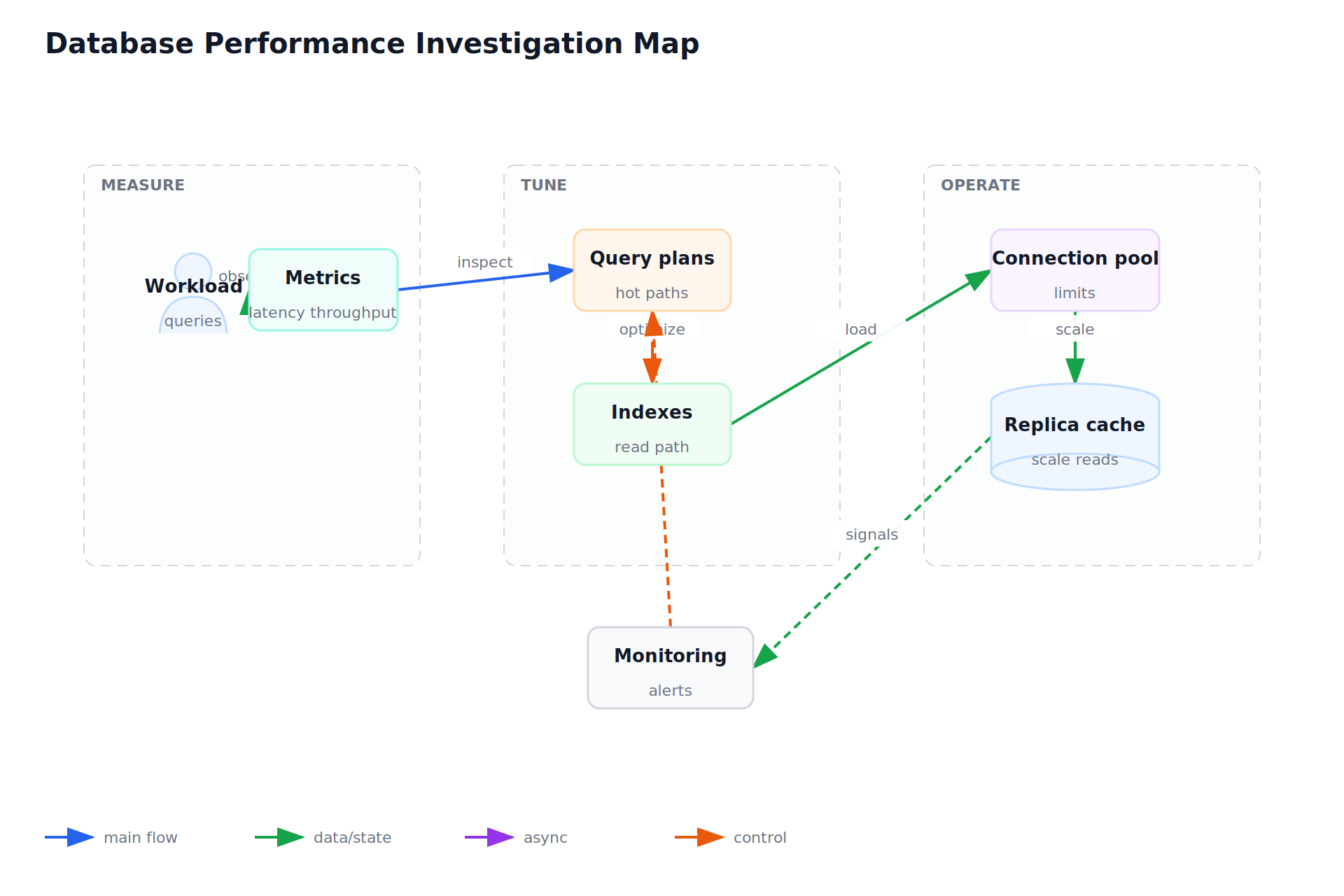
Database Performance Investigation Map
- source-page: p. 46
- batch: 21
- status: accepted
- reviewer-status: reviewed
- fidelity-score: 0.9
- spec: bbg-p0046-observability-reliability-and-debugging-observability.json
- svg: bbg-p0046-observability-reliability-and-debugging-observability.svg
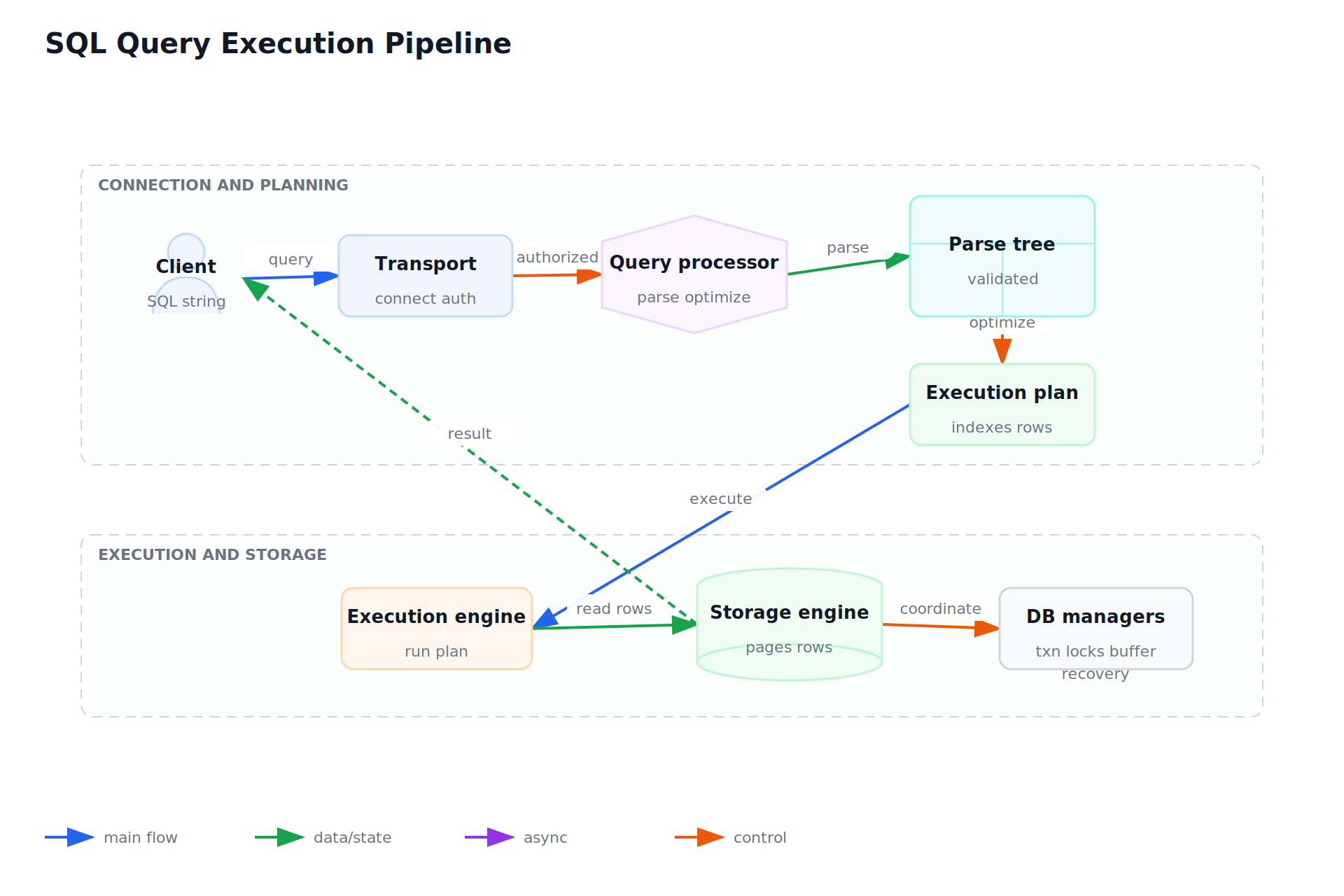
SQL Query Execution Pipeline
- source-page: p. 202
- batch: 21
- status: accepted
- reviewer-status: reviewed
- fidelity-score: 0.9
- spec: bbg-p0202-database-performance-indexing-database-performance.json
- svg: bbg-p0202-database-performance-indexing-database-performance.svg
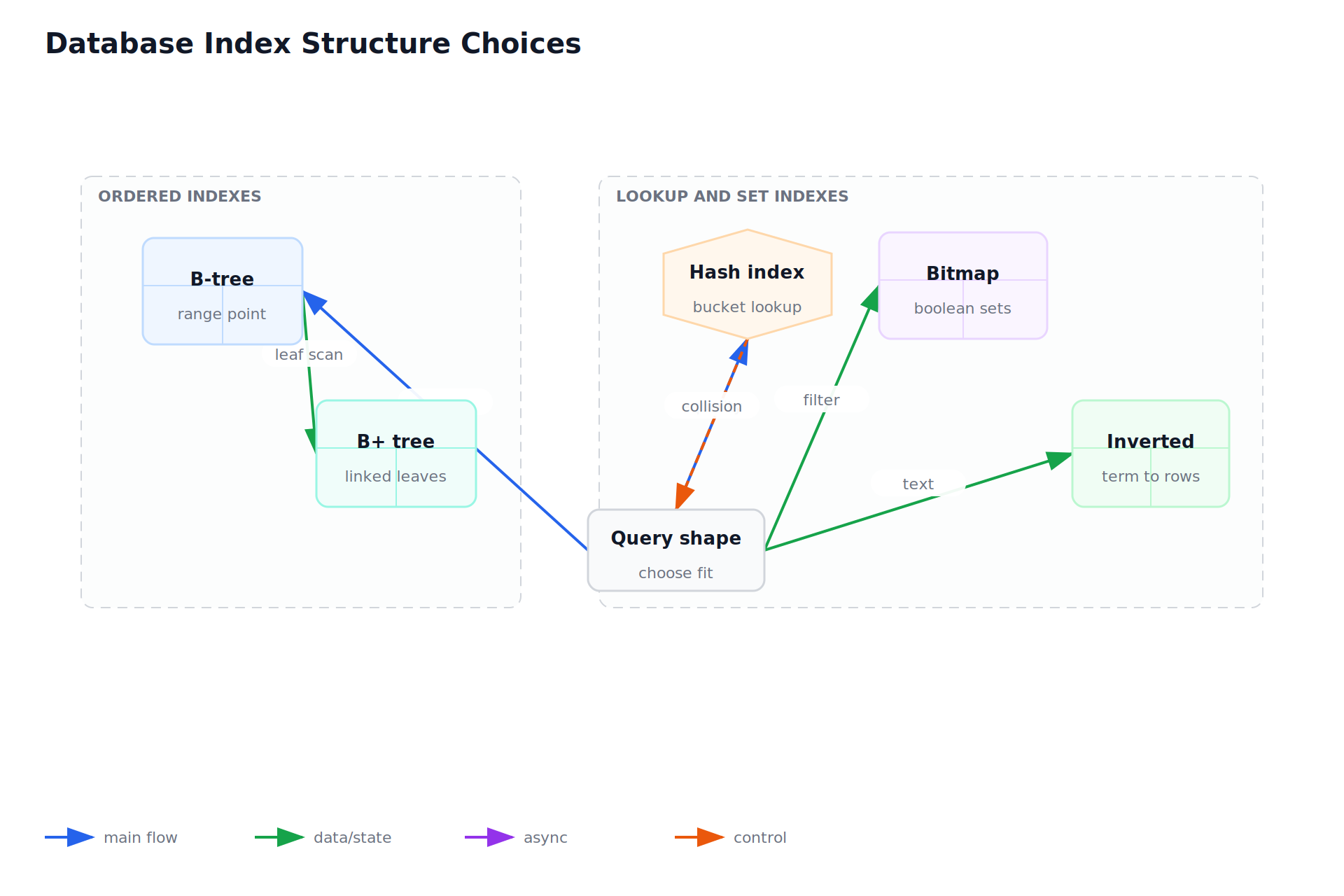
Database Index Structure Choices
- source-page: p. 240
- batch: 25
- status: accepted
- reviewer-status: reviewed
- fidelity-score: 0.9
- spec: bbg-p0240-database-performance-indexing-database-performance.json
- svg: bbg-p0240-database-performance-indexing-database-performance.svg
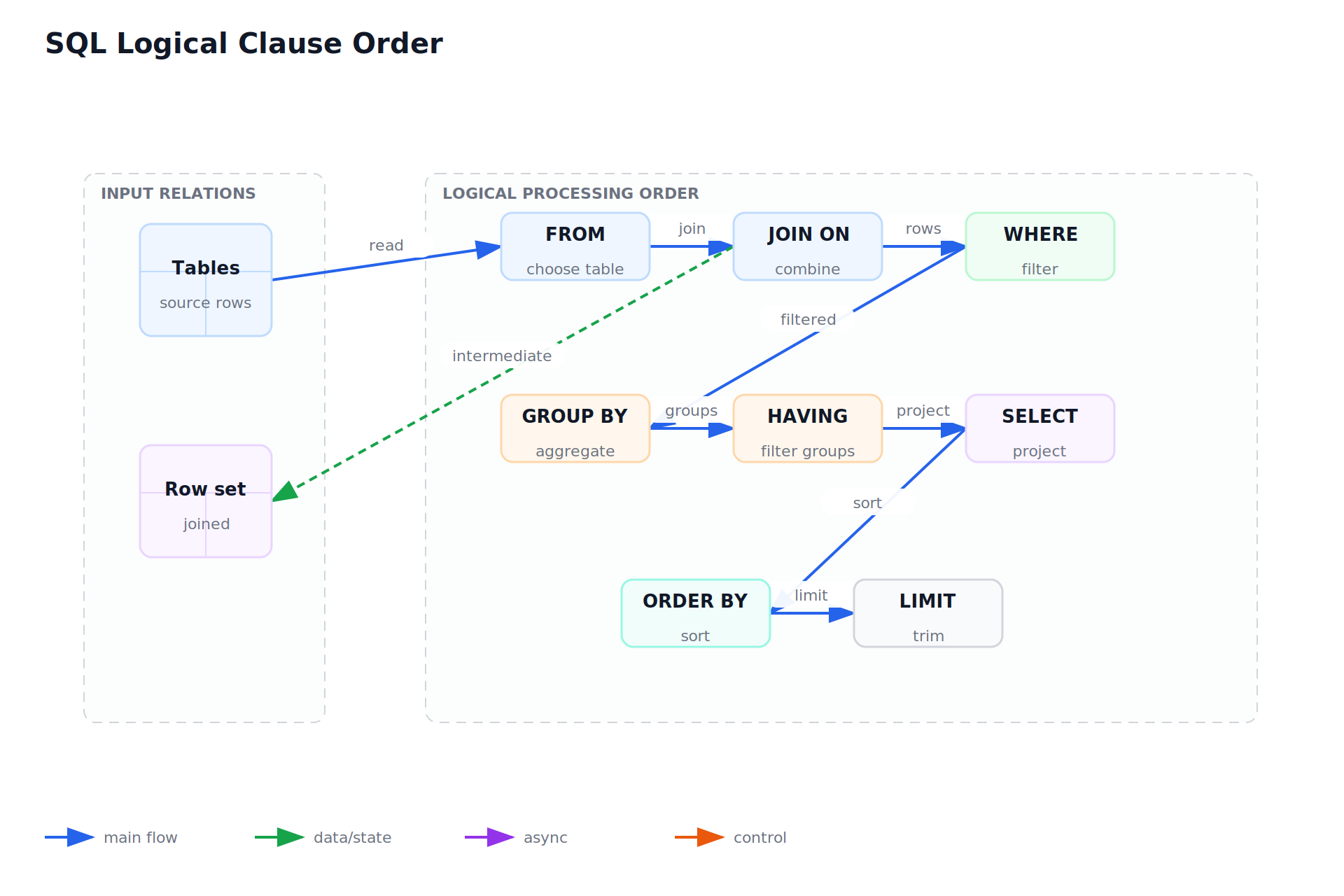
SQL Logical Clause Order
- source-page: p. 155
- batch: 29
- status: accepted
- reviewer-status: reviewed
- fidelity-score: 0.9
- spec: bbg-p0155-database-performance-indexing-database-performance.json
- svg: bbg-p0155-database-performance-indexing-database-performance.svg
Open Review Queue
- none
Reviewed Non-Signal Pages
- Algorithms And Decision Models: Index + Map Map: source p. 241; batch 37; status non-signal/reviewed; ledger reason in visual-review-ledger.json
- Database Performance And Indexing: Index + Map Map: source p. 414; batch 41; status non-signal/reviewed; ledger reason in visual-review-ledger.json
Use When
- Database latency, throughput, query shape, or scaling pressure affects product behavior.
Avoid When
- The data model is wrong and needs redesign before tuning.
Core Model
- Performance follows access patterns. Indexes, partitions, pools, and replicas optimize known paths.
- Prefer explicit ownership over accidental coupling. Every boundary should say who owns correctness, cost, data, recovery, and change.
- Use corpus page pointers for inspection, and keep the chapter notes focused on reusable design decisions.
Implementation Guidance
- Capture the slow query, expected cardinality, filters, sort order, write cost, and freshness need.
- Write the smallest useful design note: purpose, inputs, outputs, state, failure behavior, observability, and rollback.
- Choose the first implementation that can be tested against the real workflow without hiding a known production risk.
Tradeoffs
- Indexes speed reads but add write cost and migration complexity.
- Centralization reduces duplicated work but can become a bottleneck when every team needs exceptions.
- Specialized infrastructure helps at scale, but it must earn its operational cost.
Failure Modes
- A query is optimized for a demo-sized table and collapses under real cardinality.
- The diagram shows boxes but not ownership, retry behavior, data freshness, or user-visible failure.
- The system has no proof path for the highest-risk assumption.
Decision Checklist
- Inspect execution plans, add targeted indexes, cap result size, and monitor write amplification.
- Name the owner, source of truth, timeout, retry policy, and evidence that the path works.
- Add one regression check for the failure mode most likely to recur.
Neutral Automation Examples
- A customer list adds a compound index for tenant and updated time instead of scanning all records.
- A neutral internal automation starts with fixtures, then adds credentials, permissions, and production scheduling only after the boundary is tested.
- A customer-facing workflow keeps irreversible actions behind explicit approval until metrics show it is safe to automate further.